Introduction
The 351-mile Los Angeles-San Diego-San Luis Obispo (LOSSAN) Corridor is vital for passenger, freight, and military movement through the San Diego region and beyond. In FY 2024, passengers boarded trains on this corridor 4.48 million times. As the second busiest intercity passenger rail corridor in the nation and the only rail connection between San Diego and the rest of the state and nation, the LOSSAN Corridor supports national and international commerce, including a growing crossborder trade market with Mexico. Every year, trains on this corridor carry billions of dollars' worth of goods.
In Our Region
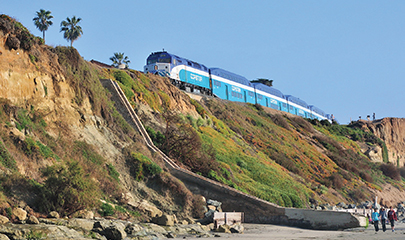
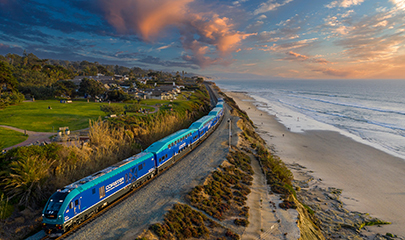
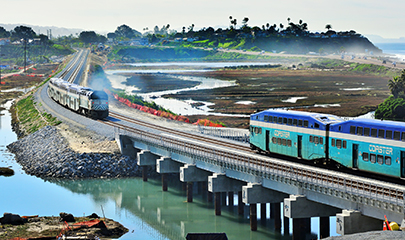
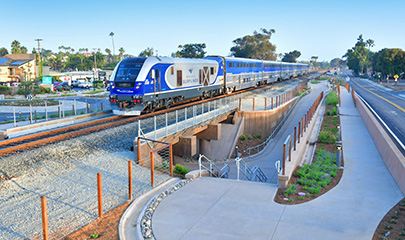
The San Diego LOSSAN Corridor spans the 60 miles between our border with Orange County and Santa Fe Depot in Downtown San Diego. It passes over six coastal lagoons, along the coastal bluffs, and through Camp Pendleton and six cities (Oceanside, Carlsbad, Encinitas, Solana Beach, Del Mar, and San Diego). Operations on the line include more than 60 trains per day, with a typical weekday including 30 COASTER trains, 26 Amtrak Pacific Surfliner trains, and 12 Metrolink trains operated respectively by North County Transit District (NCTD), Amtrak, and the Southern California Regional Rail Authority, along with SPRINTER service from NCTD and freight service from Union Pacific and BNSF Railway.
What We’re Doing
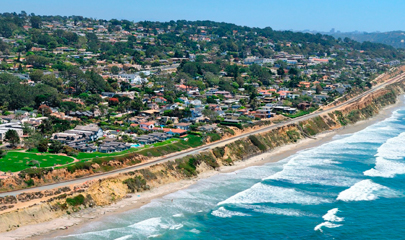
Because this rail line is so essential, we are working on short- and long-term responses to landslides, erosion, and seismic activity which have caused collapses along the coastal bluffs in Del Mar and temporary shutdowns of the rail line. The 2025 Regional Plan identifies future investment in the LOSSAN Corridor of $4.3 billion by 2035 and $13.5 billion by 2050 to keep it safe, enable double tracking, stabilize the Del Mar bluffs, and relocate the rail line.
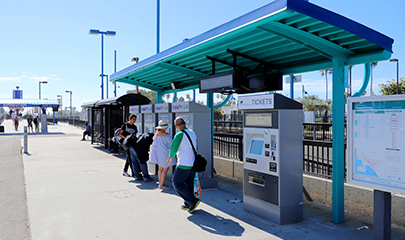
To date, we’ve double tracked 75% of the regional segment, completed four bluff stabilization projects, and started to study the options for rail relocation. Other infrastructure improvements include bridge and track replacements, new platforms, pedestrian undercrossings, and other safety and operational enhancements.
Improving resiliency and safety tops the list of reasons we are identifying and implementing solutions. Additionally, these solutions further the goals of the California State Rail Plan and SANDAG Regional Plan to increase track capacity, reduce travel times, and provide more service. The resulting increase in ridership will support local, state, and national economies and help us meet greenhouse gas emission reduction targets set by the California Air Resources Board.